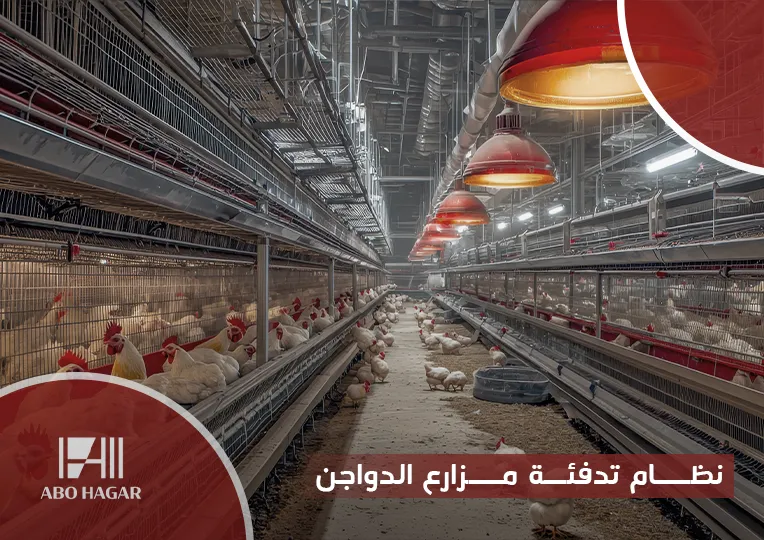
The topic explains the best heating systems for poultry farms, and their importance in stabilizing heat and reducing gas consumption, humidity and mortality, while presenting Abu Hajar’s modern solutions and the criteria for choosing the appropriate system for each farm with high efficiency.
In poultry farms, heating is an essential part of house management and maintaining a stable environment throughout the rearing cycle. Choosing a poultry farm heating system randomly may lead to varying temperatures, increased energy consumption, and difficulty controlling the indoor atmosphere.
Therefore, heating for poultry needs a thoughtful solution that combines efficient operation, balanced heat distribution, and easy temperature control. In this article, we explain the importance of the poultry farm heating system, the most prominent methods of heating poultry houses, and how to choose the most appropriate solution according to the farm area and operating needs.
What is the appropriate temperature for heating poultry?
The appropriate temperature inside the poultry house varies according to the age of the birds, the type of breeding, the nature of the house, and the level of humidity and ventilation. During the incubation stage, chicks need higher temperatures than older birds, and then the temperature is gradually adjusted as the flock grows according to the appropriate breeding program.
One should not rely on a single temperature for all stages of the cycle; Continuous monitoring of the behavior of birds and their distribution within the house helps assess the suitability of thermal conditions. The heating system must also work in conjunction with ventilation to maintain a suitable environment inside the house.
What is the best heating system for poultry farms?
There is no single system Heating and ventilation systems It is considered the best for all poultry farms, as choosing the appropriate heating system depends on the area of the house, the type of insulation, the number of birds, their age, the nature of ventilation, outside temperatures, and the available energy source. In general, hydronic central heating systems are suitable for larger farms that need uniform heat distribution and better control of operation, while spot heaters may be more suitable for some small houses or nursery stages.
The importance of choosing a professional poultry farm heating system lies in achieving several operational and production benefits, the most notable of which are:
- Maintaining stable temperature inside the house.
- Reduce the impact of cold weather on the operating environment.
- Improving heat distribution within all parts of the house.
- Supporting herd stability and reducing crowding in certain areas.
- Help achieve regular running throughout the breeding cycle.
- Reducing problems resulting from sudden temperature changes.
Abu Hajar Company provides various solutions for heating poultry farms. The appropriate system is determined after studying the area of the house, the nature of the insulation, and operating requirements, with the aim of choosing the solution that achieves appropriate heat distribution and operating efficiency that matches the needs of the farm.
Contact us now to design an integrated and engineered heating network according to the space of your wards and learn the best Heating devices in poultry farmsIt guarantees perfect heat distribution and economical consumption throughout the cycle.
What is the best poultry farm heating system?
The best heating system for poultry farms cannot be determined without knowing the farm conditions; The needs of a small barn differ from the needs of a farm that includes several barns or high production densities. The correct choice depends on the area of the house, the level of insulation, the number of birds, their age, the ventilation method, the outside temperature, in addition to the cost of the available energy source.
And it counts Central heating systems Hydronics are a suitable option for projects that need uniform heat distribution and controllable operation across a house or multiple houses, while localized heating systems can suit some small farms or nursery applications. Therefore, it is preferable to choose the system based on the actual heat load calculation of the farm rather than relying on one type as being best for all cases.
Smart condensing boilers are currently considered the best option for heating poultry farms, due to their ability to reuse heat lost in the exhaust, which significantly reduces gas consumption while maintaining stable temperatures throughout the cycle.
A comparison of the most popular methods of heating poultry farms
There are several ways to heat poultry houses, and the appropriate system varies depending on the size of the project and the nature of operation. The following table explains the difference in a simplified manner:
|
Heating system |
Fits |
Highlights |
Considerations to take into account |
|
Local heating |
Brooding and some small wards |
Quickly provide heat near birds |
You need proper distribution to avoid uneven heat |
|
Hot air heating |
Some wards |
The speed of raising the air temperature |
Air movement and ventilation must be taken into account |
|
Central heating with hot water |
Medium and large farms |
Thermal distribution and central control |
You need proper engineering design |
|
Floor heating |
New projects |
Regular heating near the floor |
It is best to plan it during the construction phase |
|
Water radiators |
Wards that need to treat specific areas |
Possibility of distributing it according to the thermal load |
Their number and locations are determined according to the design |
Choosing the best method depends not only on the type of system, but on its suitability to the farm's actual heat load and method of operation.
Types of poultry farm heating systems from Abu Hajar Company
The selection of the thermal system for poultry projects depends on the area of the houses, the nature of the insulation, and the targeted production capacity. Traditional forced-air heating systems face complex challenges in distributing heat across the floor and mattress levels. Compared to Hydronic Heating Systems from Abu Hajar, which transfer warmth directly to birds and nests, they rely on the principle of heating water and distributing energy through an engineered network that prevents heat loss and provides a homogeneous thermal environment.
Our production lines and systems are available in detail:
-
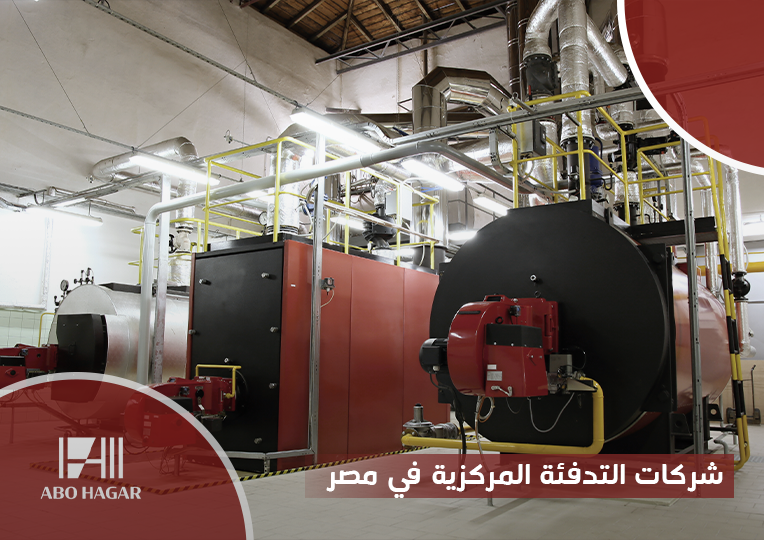
Modern central boiler systems and condensing technology (Condensing Boilers)
The central boiler is the beating heart of the water system. It heats the water and pushes it through the heating network to the distribution points inside the major wards. The smart European and Turkish condensing boilers from Abu Hajar rely on exploiting hot exhaust gases and recycling them, and condensation technology may help raise the efficiency of fuel utilization compared to some traditional heating systems, but the actual saving percentage varies according to the efficiency of the existing system, the method of operation, the level of insulation of the house, the external temperatures, and the required heat load. The percentage of fuel consumption reduction in some operating conditions may reach a percentage determined by the design of the system and farm conditions, according to the technical specifications of the boiler used.
Our models include:
- Eva S boilers: It is characterized by a compact design and high operating capacity, and relies on condensation technology to maximize fuel efficiency and ease of integration into the system.
- Era Condensing Boiler: It provides flexible solutions with various capabilities to suit different project sizes, and reduces heat loss par excellence.
- Warmhaus luxury boilers: Combining modern technology with intelligent operating control, we offer the following global ranges for heavy-duty applications:
- Law System
- Lawaconventional
- Law Plus
- Minerwa
- Enerwa Plus
- Certified Turkish DemirDöküm Boilers: We offer models (Nitromix andNitromix İoni), which relies on intelligent operating rate control techniques to rationalize gas consumption and stabilize thermal performance.
2. Underfloor Heating Systems
Floor heating is a suitable solution for some broiler farms, especially when planning the system during the house establishment phase; It relies on a network of water pipes installed under the floor to distribute heat near the bird and litter area.
It is characterized by:
- Ideal heat distribution: The warmth emanation physically starts from the bottom (the birds' feet) and slowly rises upward, eliminating thermal differences in the house.
-
Help reduce litter moisture: Maintaining the appropriate floor and ambient temperature can help reduce problems associated with excessive litter humidity, but controlling humidity and air quality also requires adjusting the ventilation and air exchange rate within the house.
- Complete space saving: Because they are installed under tiles, they do not take up any vertical or horizontal space and do not impede the movement of labor or equipment.
3. Hydraulic radiators and heat transfer units (Panel Radiators)
Abu Hajar Company provides ultra-thin European steel panel radiators, which are installed on the walls of the wards and at the bottom of the ventilation openings. They are characterized by their rapid heat transfer and the ability to distribute them accurately according to the required loads, and they offer important advantages:
- It instantly processes the incoming cold air into calm, uniform warmth before it reaches the flock.
-
Heat is transmitted based on natural heat transfer without the need for additional fans, which helps provide regular heat without relying on additional fans inside the heating unit itself, with the necessity of integrating the heating system with an appropriate ventilation system to maintain air quality inside the ward.
4. Intelligent automatic control systems and climate thermostats
Abu Hajar Company integrates advanced control solutions that include temperature sensors, smart thermostats, water flow control systems and operation according to actual needs to reduce electrical waste and ensure a stable environment through:
- Full automation: Sensors are connected directly to the boilers to automatically adjust water temperatures and flows with any change in the outside weather.
- Preventing thermal fluctuation: It ensures that temperatures remain constant to within a degree of Celsius, protecting the flock from thermal shock, which is the primary cause of bird death.
Secure your production cycle with Abu Hajar experts: The success of your investment begins with engineering the correct heating methods in poultry farms. Contact the Major Projects Department now Abu Hajar Company Via phone or WhatsApp to book a free field inspection of your wards, and start developing the appropriate engineering measurement and design for your project.
Features of the poultry farm heating system from Abu Hajar Company
Abu Hajar Central Heating Company provides advanced solutions that combine European technology and high operating efficiency, making its systems the best methods for heating modern poultry houses through the following advantages:
- Saving 60% of gas consumption: Our hydroponic systems are based on smart condensation technologies that ensure significantly lower operating and energy costs compared to conventional methods.
- Perfectly balanced heat distribution: The Abu Hajar poultry farm heating system ensures that warmth reaches all corners of the house evenly, which prevents the phenomenon of crowding of birds or uneven temperatures.
- Improving moisture expulsion and herd health: Unlike dry-air poultry heating methods, our hydroponic systems maintain oxygen purity and reduce harmful humidity, reducing respiratory illness and increasing feed conversion rates.
- Reliability and continuous operation: The equipment is designed to operate with arduous efficiency throughout the cycle without malfunctions, with continuous technical support with a real guarantee and the availability of original spare parts.
- Flexible and customized solutions: We offer engineering solutions that suit all spaces (small, medium, or large) and are specially designed according to the nature and insulation of your rooms.
How does modern heating help increase farm profits?
Investing in a highly efficient poultry farm heating system is not just a luxury, it is a direct driver of increasing your profits and securing economic return; Modern engineering solutions translate into positive numbers in your budget through:
- Reducing feed cost: When birds live at ideal and stable temperatures, their bodies stop burning food to generate warmth, which increases the efficiency of food conversion and reduces the consumption of wasted feed.
-
Capital protectionProperly designed systems help reduce the potential for wide temperature fluctuations within the house, while humidity control and environmental health require integration of heating with ventilation and bedding management, reducing mortality and respiratory illnesses and protecting your herd from sudden losses.
- Immediate pressure on operating expenses: Gas savings of up to 60% mean that the value of the thermal system is fully recovered within a few production cycles.
We guarantee that you will engineer methods for heating poultry houses with the lowest operational cost and the longest lifespan, and we support your project with:
- Genuine 5-year warranty On all network components and boilers.
- Technical support and emergency maintenance (24/7) 7 days a week to ensure that the warmth does not stop for a single moment during the cycle.
- Clean and professional engineering implementation Our team adheres to the highest standards of biosecurity and protection of farm equipment.
How is the heating capacity required for a poultry house calculated?
The appropriate heating system capacity cannot be determined based solely on the area of the house; The heat load is calculated after studying a group of factors, the most important of which are the dimensions of the house, its height, the level of insulation in the walls, ceiling and floor, the expected outside temperature, the temperature required to be maintained inside the house, the rate of heat loss, and the nature of the ventilation system.
The engineering design of the heating system depends on determining the amount of heat lost by the house during different operating conditions, then choosing the capacity of the boiler or heating devices and the distribution network in a way that ensures reaching the required temperature without loading the system with more than its actual needs or installing a capacity less than required.
Therefore, it is preferable to calculate the heat load before choosing the type or number of heating devices, especially in medium and large farms.
How to choose the right poultry farm heating system?
Choosing a thermal system depends on precise engineering calculations that ensure the sustainability of your project. To select the ideal system, the following criteria must be considered and applied with Abu Hajar's advanced solutions:
1. House area and nature of insulation (Mechanical Engineering)
- Vast areas and modern fattening houses: The ideal option here is underfloor heating networks based on flexible European PEX pipes. Because it ensures balanced heat distribution from bottom to top and prevents heat loss at the ceiling, while keeping the mattress dry.
- Wards with open windows or dense ventilation points: It is preferable to integrate the floor system with ultra-thin Italian steel and aluminum Panel Radiators, which are installed as a thermal barrier to treat cold air as soon as it enters.
2. Production volume and breeding density (load calculations)
The number of birds affects the absolute total heat load; So Abu Hajar's experts design the system based on breeding density. In large farms, condensing boilers made of aluminum alloy or stainless steel are relied upon, which provide huge operating capacities that cover the highest production densities with consistent performance.
3. Energy and fuel efficiency
With the ever-rising energy prices, choosing an efficient poultry farm heating system is the only guarantee of profitability. Abu Hajar's European condensing technologies provide an operational efficiency exceeding 108%, thanks to the recirculation of hot exhaust gases, ensuring you reduce your gas bills by up to 60%.
4. Automatic control and easy reliability
Abu Hajar systems feature the integration of digital control panels and advanced thermal sensors that read the temperature at all angles, and automatically adjust the performance of the boilers to stabilize the temperature with complete accuracy and prevent thermal shocks to the herd.
Book an appointment for a completely free field technical inspection, and let our experts develop for you the approved thermal design that conforms to the highest European specifications to ensure the highest return on your investment.
In conclusion, relying on a modern poultry farm heating system is a basic necessity for any farm seeking to improve production, reduce costs, and achieve the highest operational efficiency. Choosing a professional heating system not only helps provide an ideal environment for poultry, but also contributes to reducing energy consumption, lowering mortality rates, and clearly improving production quality.
Contact Abu Hajar Central Heating Company to obtain the best poultry farm heating solutions and systems designed with the latest European technologies, and enjoy higher efficiency and greater energy savings with technical support and professional service that suit your farm’s needs.
Frequently asked questions
Answers about this article and related topics.
In poultry farms, hot air heaters or a central poultry farm heating system based on high-efficiency boilers are usually used to provide a balanced distribution of heat within the barns and reduce energy consumption.
Poultry farm heating methods include hot water central heating, direct air heaters, and underfloor heating, as well as modern boiler systems that provide higher efficiency and gas savings.